Local Law 33 & Local Law 95 (LL33/LL95)

Introduction
Understanding NYC’s Local Law 33/95
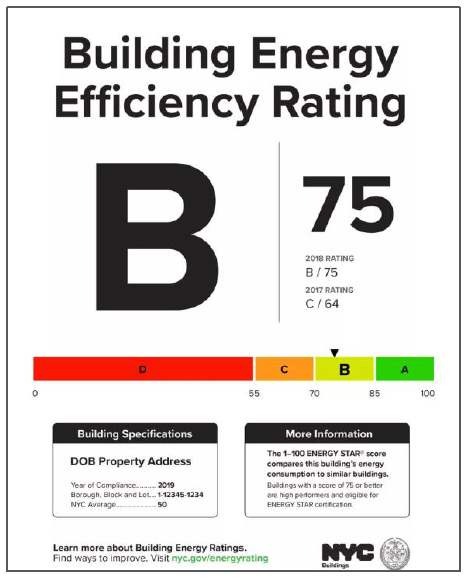
Your Building’s Energy Grade Explained
New York City’s Local Law 33 (LL33) is already in effect and applies to buildings larger than 25,000 square feet. Since 2020, these buildings have been required to display an energy efficiency grade at each public entrance. Local Law 95 (LL95) later updated how those grades are calculated and distributed across the city. Your building’s grade is based on its ENERGY STAR® Portfolio Manager score, which comes from the annual energy benchmarking required under Local Laws 84 (LL84).
Think of it like the letter grades posted in restaurant windows—except instead of food safety, this one reflects how efficiently your building uses energy. Grades range from A to D, and they’re visible to tenants, visitors, lenders, and prospective buyers.
Think of it like the letter grades posted in restaurant windows—except instead of food safety, this one reflects how efficiently your building uses energy. Grades range from A to D, and they’re visible to tenants, visitors, lenders, and prospective buyers.
What Your Score Means
What Does Your Grade Mean — and How Can You Improve It?
If you’re unsure how your building earned its grade—or what steps would actually move the needle — you’re not alone. The path to improvement isn’t always obvious.
That’s where Bright Power comes in. We help you make sense of your building’s energy and water data, identify practical opportunities for improvement, and create actionable plans to raise performance — and your grade — over time.
No guesswork. Just a smarter path to a better-performing building.
Request A Consultation
That’s where Bright Power comes in. We help you make sense of your building’s energy and water data, identify practical opportunities for improvement, and create actionable plans to raise performance — and your grade — over time.
No guesswork. Just a smarter path to a better-performing building.
Frequently Asked Questions
Learn more about Local Law 33/95 building energy grades.
Your building grade not only provides proof of your energy performance, it reaches more than your building occupants. NYC buildings over 25,000 square feet are required to post their grade annually – prominently at every public entrance.